
The Joint Warfare Centre (JWC) established its Fight Club in 2023 to raise the warfighting intelligence quotient across the organization and NATO.
The Fight Club meets twice a year to facilitate shared understanding and applications of today’s complex joint, multi-domain warfighting topics in a collaborative environment. The approach leverages active learning through a problem-posing methodology, fostering teamwork and creative and critical thinking.
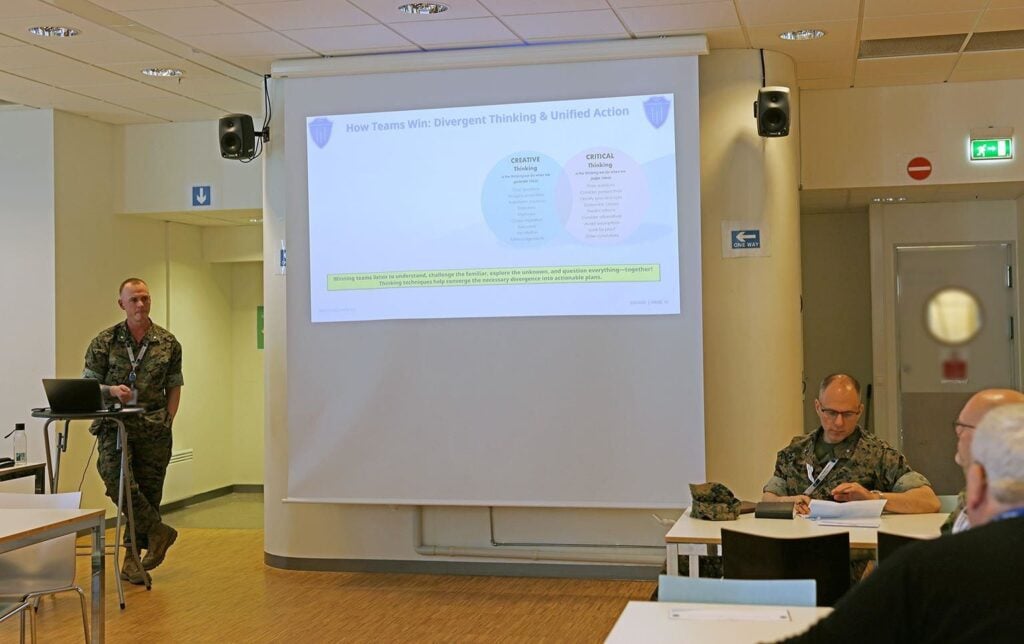
“Simply put, Fight Club is where professional development and warfare development converge,” says Major Joshua, the lead planner of the event. A U.S. Marine and behavioural scientist, he serves as the JWC’s Land and Amphibious Operations and Plans Advisor.
The most recent Fight Club, which focused on the High North, brought together the JWC staff and experts from the Norwegian Joint Headquarters (NJHQ) and the NATO Centre of Excellence Cold Weather Operations (COE-CWO).
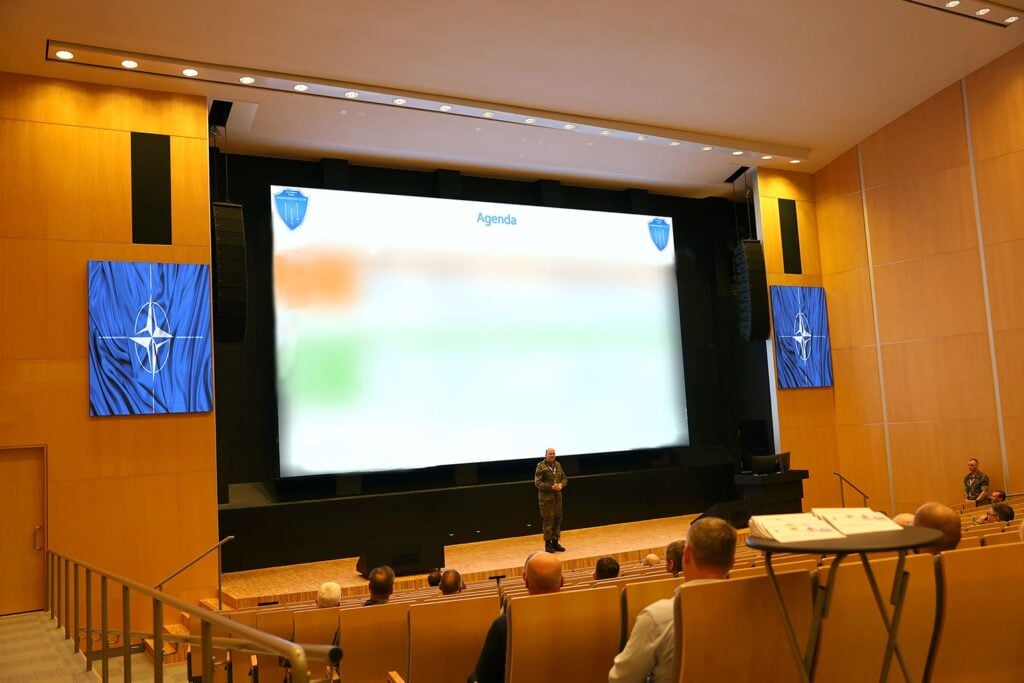
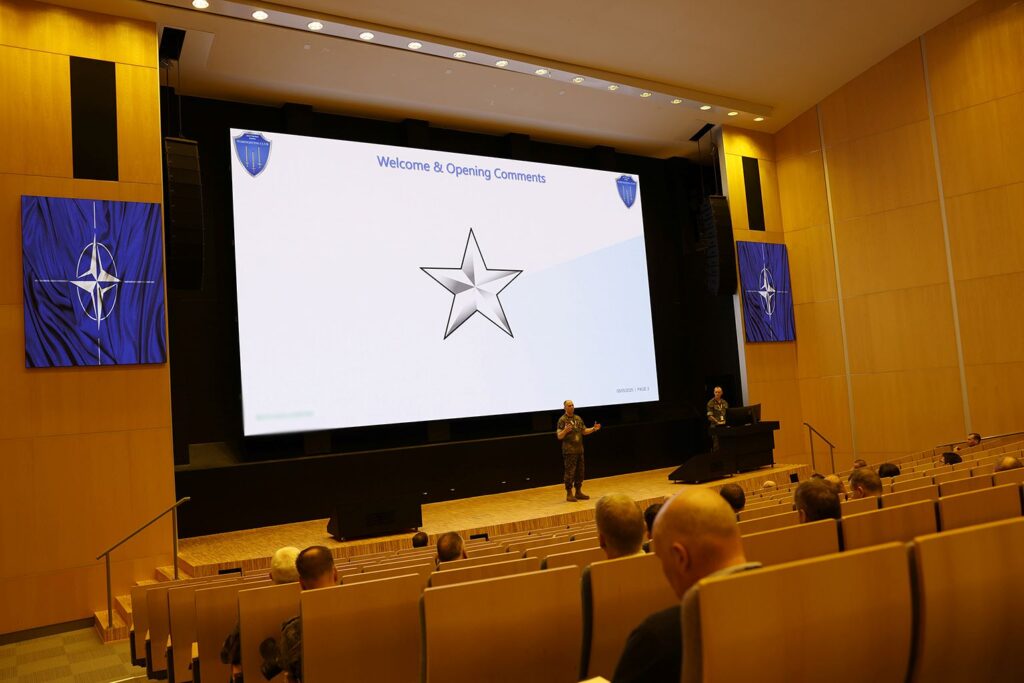
Major General Ruprecht von Butler, Commander JWC, delivered the opening remarks on May 8. He highlighted the importance of the day, which marked 80 years since the Victory in Europe (VE) Day. He said that learning from history was essential to ensuring we uphold NATO’s core values of individual liberty, democracy, human rights and the rule of law.
Brigadier General Raymond Adams, the JWC’s Deputy Commander and Chief of Staff, then took the podium to speak about the strategic importance of the High North in an era of global uncertainty.
Over the next hours, the subject matter experts from NJHQ and COE-CWO gave insightful presentations about this increasingly contested region.
The morning briefs also included a presentation about the JWC-led Joint Operations Planning Group Leaders Workshop (JOPGLWS), which addressed the operational challenges recently encountered by Joint Force Command Norfolk when revising regional plans in collaboration with the JWC, as well as the overall NATO operations planning process.
“With the JOPGLWS, the JWC transforms theoretical doctrine into practical skills essential for senior leaders and planners to best envision and communicate how to fight and win,” Major Joshua added.
“Similar to Fight Club, this is all about enhancing NATO’s cognitive advantage in planning and decision-making.”
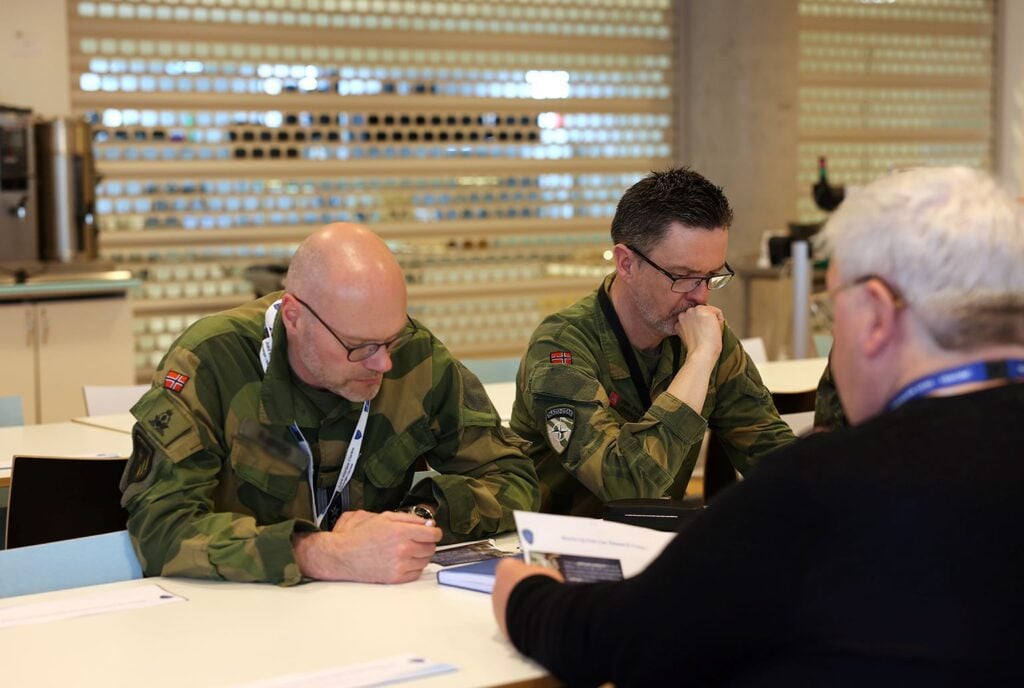
The afternoon of the Fight Club initiated small-group discussions and plenary back-briefs on practical ways to apply the divergent perspectives on the High North for a converged way forward.
Closing the Fight Club, Brigadier General Adams noted that this collaborative approach exemplified all participants’ commitment to NATO’s warfare development agenda, identifying challenges and opportunities in operational planning to maintain a warfighting edge.
Fight Club is a dynamic forum that provides participants the opportunity to discuss and debate matters of strategic importance. This is a powerful tool that allows us to develop the skills necessary to out-think, out-pace, and out-fight our adversaries. Deliberate and rigorous engagement, like we see in Fight Club, helps preserve our strategic edge.
Brigadier General Raymond Adams,
JWC Deputy Commander and Chief of Staff