Interview with the NCGP leadership at JWC: “Trust, legitimacy, and influence can be more decisive than manoeuvre and firepower”
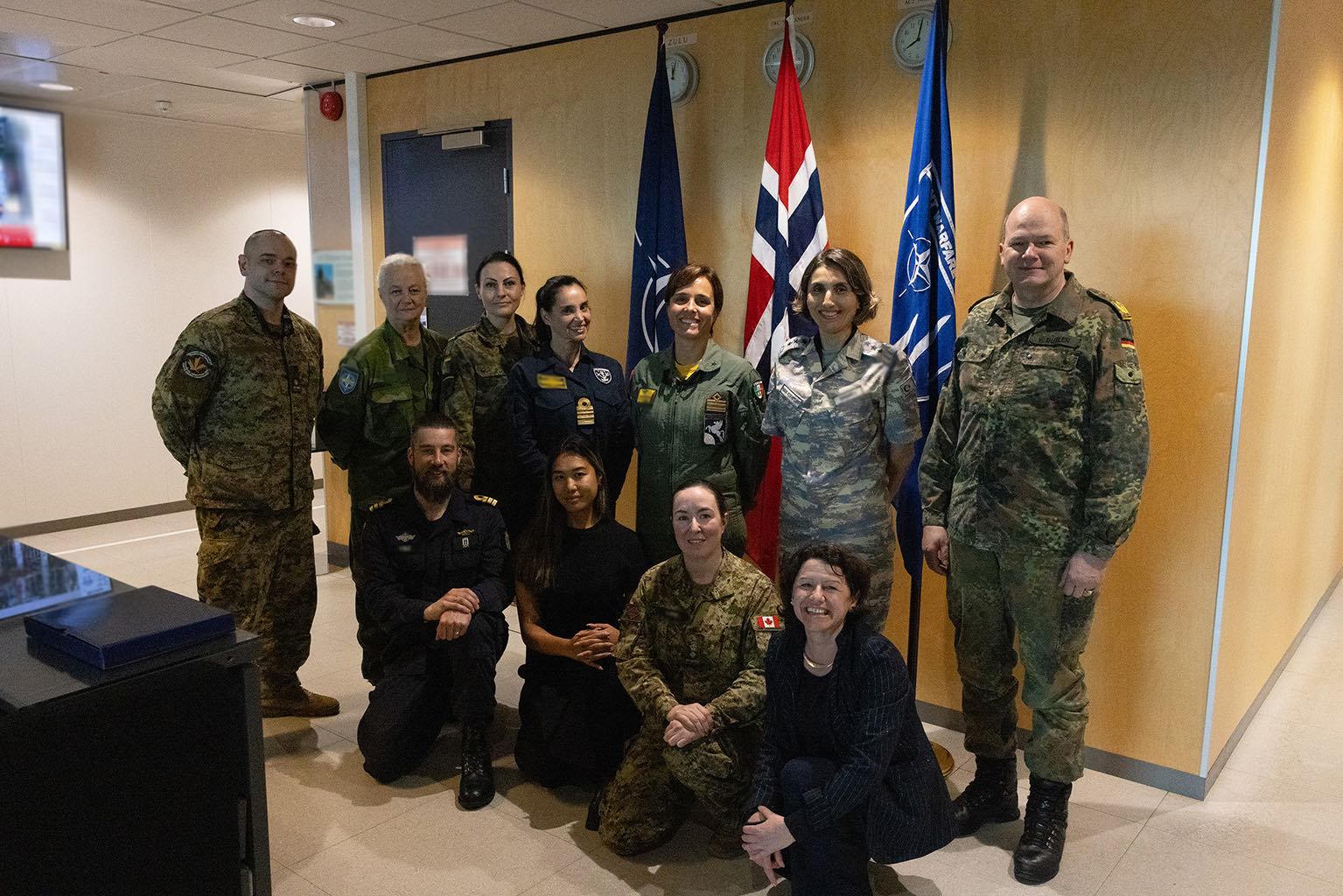
STAVANGER, Norway – The NATO Committee on Gender Perspectives (NCGP) visited NATO’s Joint Warfare Centre (JWC) on June 8 and 9, 2026.
This year marks the 50th anniversary of the formal recognition of the NCGP, which was established in1976 as the “Committee on Women in the NATO Forces.”
The NCGP today serves as a NATO military sub-committee focused on promoting gender mainstreaming and the military integration of gender perspectives, including representation from each NATO member state.
The visit to the JWC provided a great opportunity for the JWC’s gender community to meet with the NCGP representatives and gain insight into the committee’s near-term priorities.
These include contributions to NATO’s first doctrine for gender perspectives in military operations and its four strategic objectives: gender-responsive leadership and accountability, increasing women’s participation at all levels, preventing threats that disproportionately impact women, and protecting women and girls from gender-based violence.
Gender impact on future defence capabilities
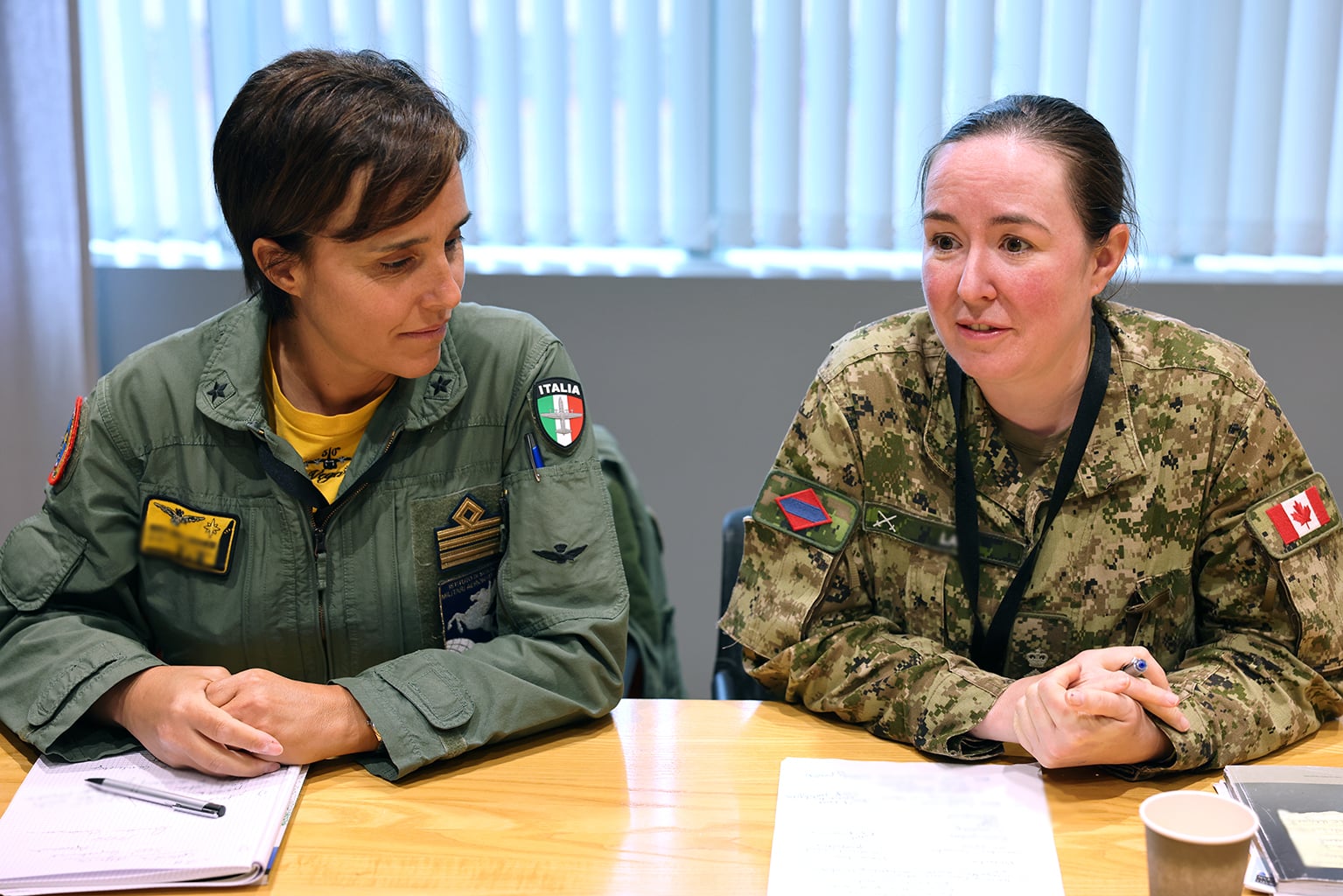
Lieutenant Colonel Rosa Linda Lucchesi, a pilot in the Italian Air Force and the Chair of the NCGP, said that the committee’s diverse tasks contribute directly to NATO’s Concept of Deterrence and Defence of the Euro-Atlantic Area and the successful planning and conduct of multi-domain operations (MDO).
Lieutenant Colonel Lucchesi said: “Force packages in NATO need to have the right composition of men and women to increase our operational effectiveness and to protect. For the full scale of multi-domain operations, we need to adopt a 360-degree comprehensive approach. This means that we cannot afford blind spots, and we must make full use of all available means, including the human element. Our most important resource is the human element, so we cannot forget that.”
Lieutenant Colonel Melanie Lake, a combat engineer in the Canadian Army and one of the Deputy Chairs of the NCGP, noted that the committee was “laser-focused on Deterrence and Defence of the Euro-Atlantic and operationalizing the gender perspective in all of NATO’s core tasks.”
She said the NCGP has shifted its focus to enabling deterrence and defence, for instance by examining how it can support force generation, drawing “the best and brightest from across our societies, people from different backgrounds and experiences, for sustained full-scale defence.”
She explained that the four core pillars of the United Nations Security Council Resolution (UNSCR) 1325 – participation, protection, prevention, and relief and recovery – reinforce gender perspective as a “military capability that offers all kinds of military effects and advantages,” which needs to be integrated into MDO and developed across the DOTMLPF (doctrine, organization, training, materiel, leadership and education, personnel, facilities) spectrum.
Lucchesi and Lake highlighted the importance of gender focal points, gender advisors and well-established networking structures. They also stressed the key role of NATO’s lessons learned capability and the exercises directed by the JWC, which allow learning, sharing of best practices and continuous improvement across the Alliance.
The NCGP leaders then spoke on a 2025 report from the Joint Analysis, Training and Education Centre titled “Deep Dive into the Nexus of Gender and Combat Medicine in Ukraine,” which focuses on gender perspectives in combat medicine, providing “recommendations to support the evolution of NATO medical doctrine, enhance interoperability, and strengthen Allied preparedness for the gender dimensions of defence and deterrence.”
Lieutenant Colonel Lake said: “With the prolonged evacuation times that we are seeing for casualties in Ukraine, when people don’t have the right protective equipment, the sort of injuries that might have been more minor when you are able to get people to care within the golden hour, those can become very decisively life-threatening.”
She underlined the importance of personnel having suitable equipment to ensure that women’s and men’s health needs can be met on the front lines.
Gender-responsive leadership
Lieutenant Colonel Lucchesi also highlighted the importance of gender-responsive leadership – a topic discussed in detail in the 2025 edition of the JWC’s warfare journal, The Three Swords: Why NATO Advocates Gender-Responsive Leadership.
“Leadership is fundamental. We are not looking for leadership support. We are looking for leaders to lead,” she said.
Adding to the well-known statement from NATO Secretary General Mark Rutte that NATO is “ready to defend every inch of its territory,” Lieutenant Colonel Lake said: “NATO is a whole lot more than its territory. It is every inch, every person. People are at the centre of every security issue and that is equally applicable inside our organization. Like the way we build and train our teams, there is an inextricable link between how we conduct ourselves internally to how we perform on the battlefield. How cohesive our teams are, how inclusive, how disciplined and trustworthy … not only do [these things] enable success on the battlefield, but they are critical to enabling the legitimacy of our operations.”
Lake added: “We are operating more and more in complex urban environments, and things like trust and legitimacy and influence can be more decisive than manoeuvre and firepower.”
Lieutenant Colonel Lucchesi concluded by saying that the NATO Policy on Women, Peace and Security is a force multiplier for the Alliance.
Gender perspective and the NCGP’s work enhance NATO’s operational effectiveness and overall efforts to achieve gender equality, while simultaneously underscoring the Alliance’s shared values of individual liberty, democracy, human rights and the rule of law.