STAVANGER, Norway – Judging by the beer prices downtown, the answer to the question posed above is “No!” However, if you consider the cost of setting up a temporary training location at a minimum cost of half a million Euro and deploying two supporting personnel per operational planner, the obvious question becomes — how can NATO not afford to train in Stavanger?
JWC’s “Three Swords”
Let’s look at the three main capabilities of JWC as our “three swords”:
The first sword is our personnel, and for this “sword” the demand is greater than the supply. Our capability to plan and direct exercises, produce scenarios and provide media simulations is unique and largely indifferent to exercise location.
The second sword is our state-of-the-art technology, which is essential for the NATO Alliance, enabling us to set up and host virtual exercises to Training Audiences from around the globe, here, at the JWC.
The third sword is our state-of-the-art turn-key facilities in the “perceived-as-expensive” City of Stavanger, which is also the topic of this article.
It all comes down to these two primary questions: are we to focus on o perational level planning and execution, minimizing the Real Life Support (RLS) footprint or conduct a full-blown, common-funded deployment exercise with all the bells and whistles?
What is the idea behind turn-key facilities?
With the significant increase in NATO Command Structure (NCS) and NATO Force Structure (NFS) exercises and their associated costs, it is appropriate to re-visit the initial rationale for constructing JWC’s turn-key facility in Stavanger.
The idea behind turn-key facilities is to provide for NATO a ready-to-use exercise facility so as to avoid:
- the one-time cost and effort of setting up temporary training locations all over Europe for each and every event. The cost of a temporary location could easily amount to around half a million Euro;
- deploying HQ support personnel and, thus, allocating a fully manned team to set up, run and tear down CIS networks;
- expensive commercial accommodation (JWC arranged close to 25,000 nights in cost-effective military accommodations here in Stavanger in 2011);
- over-committing the scarce NATO deployable CIS resources; since the JWC has a ready-to-use CIS infrastructure at all times;
- significant contractor and Host Nation support required in a temporary facility;
- some functional (J) areas getting fully occupied by delivering the required exercise support rather than focusing on the exercise play, where they train on their essential functions within their HQs.
What can we offer?
The primary issue is the capability to train two HQs in two Combined Joint Operations Centres (CJOCs) simultaneously with a Training Audience of up to 1, 200 people.
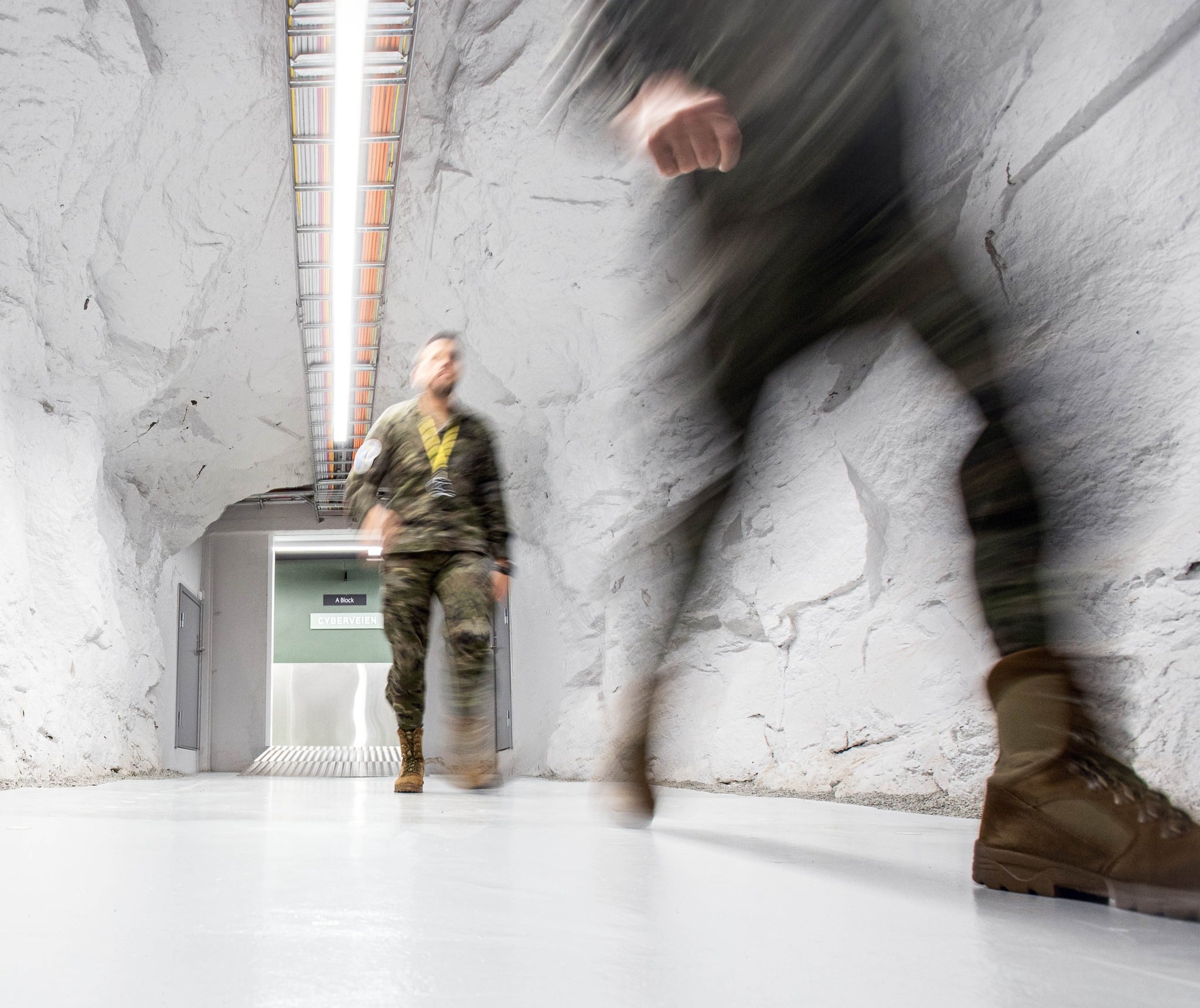
Moreover, on September 28, 2022, the JWC and the Norwegian Defence Estates Agency (NDEA) held a ribbon-cutting ceremony to celebrate the re-opening of the In-Rock Facility, following the completion of a two-year modernization project.
The modernization project of the In-Rock Facility, funded by NATO and carried out by NDEA, involves extensive upgrades of infrastructure and communications and information systems (CIS), which aim to enhance the JWC’s capability in delivering high-quality exercises to address defence and security needs of the Alliance.
As for events supported within the JWC’s Programme of Work (POW), the Centre covers the cost. For any events not supported by the core POW, HQs can still request to utilise the facilities, in which case the JWC will provide support within available means and capabilities, and only charge for the incremental cost.
Accommodations: Contrary to popular belief, Stavanger does not host an international oil convention every day of the year, so finding an accommodation should be easier than you think. It is worth noting that even though hotel capacity has gone up and hotel prices have gone down in the last few years, it is true that hotels in Stavanger are costly, and the national per diem payments are higher for stays in Norway. However, even with the central European reasonable hotel prices, no NATO training facility can default to commercial accommodation.
That is why JWC encourages the exercise participants to use the Host Nation military accommodation at Camp Madla, which can accommodate up to 1,200 personnel.
In 2011, close to 25,000 nights were booked at Camp Madla at an average cost of 25 Euro, with breakfast. If we, for the sake of the argument, compare the cost of this to a low average cost of 75 Euro a night in hotels, this would mean a saving of at least 50 Euro a night or 1.25 million Euro potential savings for the nation. What we can say is that we rarely max out the military accommodation capacity. In 2011 8,500 nights were still accommodated in hotels.
In addition, unlike some other military accommodation options, Camp Madla accommodates maximum five persons per room and comes with bed linen and cleaning services. There is also access to a gym, Role 1 medical facility, laundry facilities, a bar and a cafeteria with free internet. Camp Madla can also offer reasonably priced single room occupancy for the General Officers.
Meals: Breakfast is normally included in the accommodation, be it military or commercial. Lunch and dinner can be arranged at the JWC for around 20 Euro per person per day. This price can compete with most locations, including field kitchens.
Work-space: JWC was designed with Combined Joint Task Force (CJTF) exercises around the clock in mind and the maximum capacity for the kind of exercises we support now is still being assessed. Our aim is to be able to surge to a capacity of 1,200 participants including the Exercise Control (EXCON) with full CIS support.
It has helped significantly that Host Nation has provided us with access to a furnished second CJOC in addition to the newly built NATO facility, enabling us to train two HQs simultaneously in separate facilities.
An argument against our facility may be that it is very modern and clean, and that it does not provide the feeling and flavor of a tent-based exercise. We can, of course, turn-down the heating and dim the lights to create this feeling. The temporary facilities at Ulsnes that we used previously, got the thumbs up for the slightly rough field conditions and the flair of ad hoc solutions associated with exercises.
However, if NATO chooses not to use an ad hoc location, or to test an agency’s ability to contract for transportation and provide support to a 300-500-man camp (at a cost of around half a million Euros), then utilising NATO’s investment in the JWC for hosting the Training Audience can offer cost savings up to 90 percent.
Transportation: Local transportation is offered free of charge by the JWC (for the JWC POW events) through the standard support arrangement with Host Nation.
So, the need for visitors to rent vehicles (as some have done) is not a minimum military requirement. Further, the international airport at Sola is also a military airport that offers free parking, a limited ground and fuel handling capacity and there is no landing fee for the military aircraft. At the Host Nation facility of Ulsnes, there is a harbour that has been utilised by NATO ships before and as a harbour city, there are plenty of good facilities to land significant loads of equipment in Stavanger, should a Nation or NATO choose to erect a d eployed bare field camp.
Real Life Support (RLS): JWC provides force protection, registration, in-processing, security and safety control. Furthermore, and this may be of interest to some, there are two tax-free shops where you can buy souvenirs, tobacco, drinks and snacks much cheaper than those in the lively and welcoming downtown Stavanger. The fresh air and the hiking opportunities are also complementary as well as fishing in the sea.
Other arguments than cost: Cost, of course, cannot be the only factor when NATO chooses an exercise location. However, training objectives for each exercise must be carefully ba lanced against the costof achievement of those very objectives.
Furthermore, some training objectives may conflict and jeopardise each other. The main benefit, apart from cost, with a turn-key facility, is that NATO can conduct a very focused, realistic and demanding training, integrating all aspects of operational level planning and execution into the same exercise with a very low risk of failure in the supporting systems. This is also our main task at the JWC.
Conclusion
So, if you recognise that you can save significant amounts on accommodation and ready-to-use facilities and you don’t have to rig one-time locations with CIS and tents, the obvious answer is that JWC is the default training location from a cost perspective. And finally, to come back to the starting point of this article, the beer you get downtown does not have to be expensive for our friends since we know a place that sells two for the price of one.
Welcome to Stavanger!
By Torgrim Alterskjær, Section Chief Budget and Disbursing, Joint Warfare Centre
(Updated from original article published in The Three Swords magazine, May 2014)